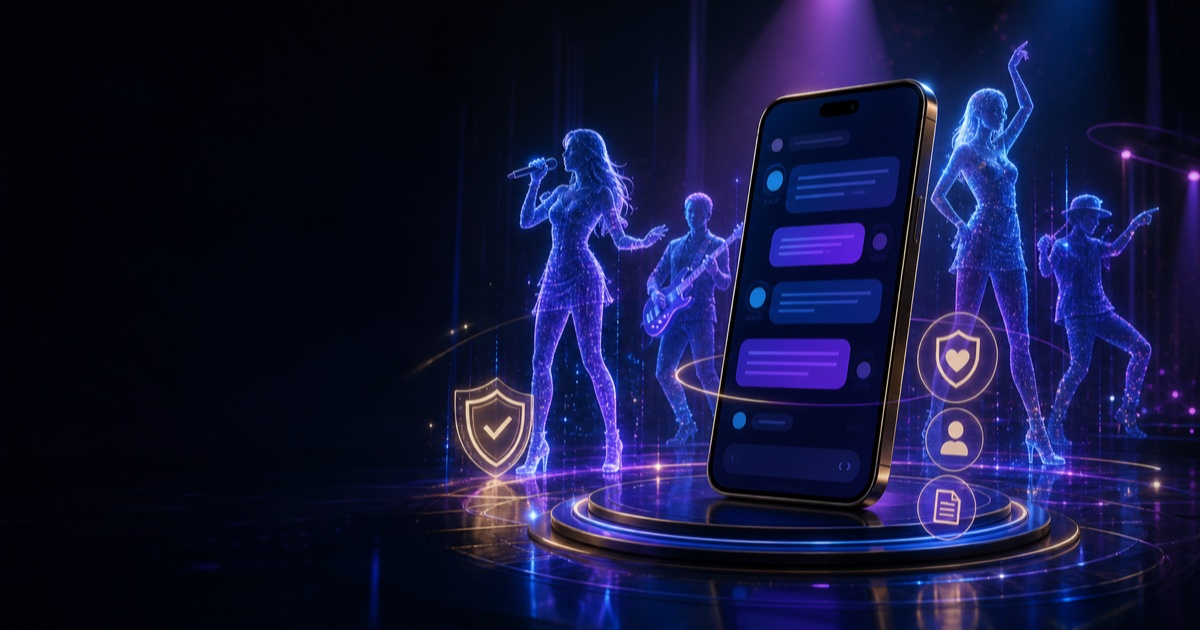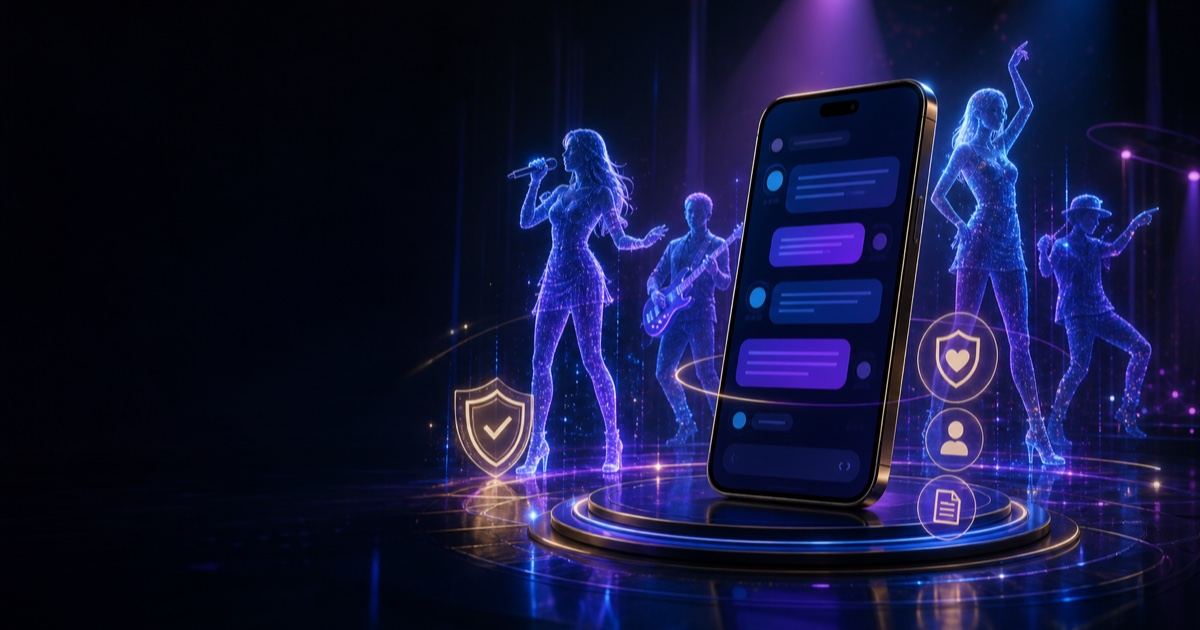
Fans sometimes search for a way to “chat with Taylor Swift” or another celebrity through AI. The accurate description is celebrity-inspired fictional chat: a generated persona, not the real artist and not a private conversation with them. No generated reply should be treated as a quote, confession, endorsement, or factual account.
Start with the right expectation
A model can reproduce broad patterns such as an upbeat tone, interview-style themes, or a fictional performer’s vocabulary. It cannot verify a celebrity’s private feelings or create a mutual relationship. Even correct public facts can be mixed with invented details. Keep a visible mental—and ideally on-screen—label: “This is AI-generated role-play.”
Choose prompts that celebrate creativity, not impersonation
The safest fan experiences focus on original scenarios: co-writing a fictional tour concept, discussing general songwriting techniques, designing an imaginary album era, or role-playing an interview with an entirely fictional pop star. Avoid prompts that ask the model to reveal “secrets,” make accusations, imitate private communications, or convince someone that the output is authentic.
Responsible prompt examples
- “You are a fictional stadium-pop songwriter. Help me brainstorm five themes for an original chorus.”
- “Role-play a clearly fictional press interview about an imaginary album. Do not claim real events.”
- “Explain three storytelling devices commonly used in pop songs without copying lyrics.”
- “Create an original performer with influences from country, synth-pop, and indie folk, but a distinct name and history.”
Protect artists, fans, and yourself
Do not use a real person’s voice or likeness to sell a product, solicit money, harass someone, or fabricate intimate material. Do not post cropped screenshots that hide the AI disclosure. If you share a creative exchange, label it prominently as generated and avoid suggesting that the celebrity participated.
Protect your own data too. Do not send private contact details, payment information, identity documents, or intimate media. A real celebrity will not ask for gift cards, cryptocurrency, credentials, or secrecy through an AI-character app. If a conversation makes such a request, stop and report it.
How to evaluate a celebrity-inspired chat app
- Disclosure: Does it continuously identify the character as synthetic?
- Controls: Can you report a persona, delete chats, and delete your account?
- Provenance: Does it say whether a character is official, licensed, or fan-created?
- Safety: Are impersonation, fraud, harassment, and exploitative content prohibited?
- Privacy: Can you understand what is collected and how long it is kept?
Prefer inspiration over imitation
The most durable creative option is an original character. You can borrow high-level genre ingredients—confessional songwriting, elaborate stage design, fan-friendly humor—without using a real name, face, voice, personal history, or implied endorsement. That gives you more room to create while reducing confusion and rights concerns.
Celebrity-inspired AI chat should remain obviously fictional entertainment. If an experience depends on users believing the real person is present, it has crossed the line from playful role-play into deception.